- Home
- Home Repair Loans
Home repair loans
Two Blocks Lending Home Repair Loans for Urgent Fixes
Paying for a roof leak, a burst pipe or a dead water heater with a small personal loan: typical repair costs, payments and what to ask a contractor first.

What a home repair loan covers
A home repair loan here is an unsecured personal loan of $500 to $5,000 for a fix that cannot wait, such as a leaking roof, a failed water heater or a broken sewer line. Two Blocks Lending requests for repairs never use your home as collateral.
That last point separates Two Blocks Lending home repair offers from home equity products, and it is why lenders describe them as unsecured lending. A home equity loan or line of credit can lend far more at lower rates, but it puts your house on the line and often takes weeks to close. For a repair under $5,000 that has to happen this week, a personal loan is usually faster and simpler, and renters can use one too for items they own, such as appliances or a window AC unit.
Typical home repair personal loan requests through our network fall into a few groups: water damage and plumbing, roofing and gutters, electrical faults, heating and cooling breakdowns, and structural fixes like a sagging porch step or a cracked foundation vent. Larger remodels, additions and full roof replacements are outside what a $5,000 personal loan is designed for, so Two Blocks Lending offers focus on the urgent fix rather than the dream renovation.
What common repairs cost
Most urgent home repairs fall between $300 and $5,000, and the price depends heavily on region, access and parts. The table shows typical ranges reported by contractors for common jobs; get at least two written quotes for your own home.
| Repair | Typical cost | Notes |
|---|---|---|
| Roof leak patch | $400–$1,800 | More if decking is rotted |
| Tank water heater replacement | $1,200–$3,500 | Includes haul-away and permit in many cities |
| Burst pipe repair | $300–$1,500 | Drywall and flooring repair are extra |
| Sewer line spot repair | $1,000–$4,000 | Camera inspection usually $150–$300 |
| Electrical panel breaker or wiring fix | $200–$2,000 | Full panel replacement can exceed $2,500 |
| Furnace or AC repair | $150–$1,800 | Compressor replacement costs more |
Two Blocks Lending requests for home repairs often come in just after the quote arrives. Bring that quote with you when you choose an amount: borrow the written figure plus a small cushion of 10% to 15% for surprises found once walls or roofs are opened, and no more.
Payments for common repair amounts
At an example APR of 24.90%, a $1,500 repair loan costs about $142.49 a month over 12 months, and a $3,000 repair costs about $159.96 a month over 24 months. The cards below show three common sizes.
Roof patch or pipe repair. About $142.49 a month over 12 months at 24.90% APR (estimate).
Most requestedAppliance or system$2,00012–18 months typicalWater heater or furnace part. About $134.29 a month over 18 months at 24.90% APR (estimate).
Larger repair$3,00018–24 months typicalSewer line or electrical work. About $159.96 a month over 24 months at 24.90% APR (estimate).
These are estimates, and personal loan rates vary by lender. A borrower with strong credit might see 12% APR, which brings the $2,000 example down to about $121.96 a month over 18 months. Our rates page explains how a score band shifts the price of a home repair personal loan.
Contractor financing or a personal loan
Many contractors offer their own financing, often with a 0% promotional period. It can be cheaper than a personal loan if you repay before the promotion ends, and much costlier if you do not, because deferred interest can be charged back to the start.
Read the promotion carefully before choosing it over a Two Blocks Lending offer. "No interest if paid in full in 12 months" usually means deferred interest: miss the deadline by one dollar and the full year of interest, often at 26% or more, lands on the balance. A true 0% APR offer only charges interest on what remains after the promotion. A personal loan through a Two Blocks Lending match has no promotion to lose, and its rate and end date are fixed from day one.
Paying the contractor in full with a personal loan can also help you negotiate. Some contractors quote less for a cash job than for a financed one, because they avoid the financing company's fee. Ask for both prices, then compare the cash price plus Two Blocks Lending interest against the financed price. Our comparison of a personal loan and a line of credit for home repairs covers the other common choice.
Check insurance before you borrow
Homeowners and renters insurance can cover sudden damage such as a burst pipe or storm-torn shingles, minus your deductible. It rarely covers wear, slow leaks or maintenance, so many repairs still fall to you.
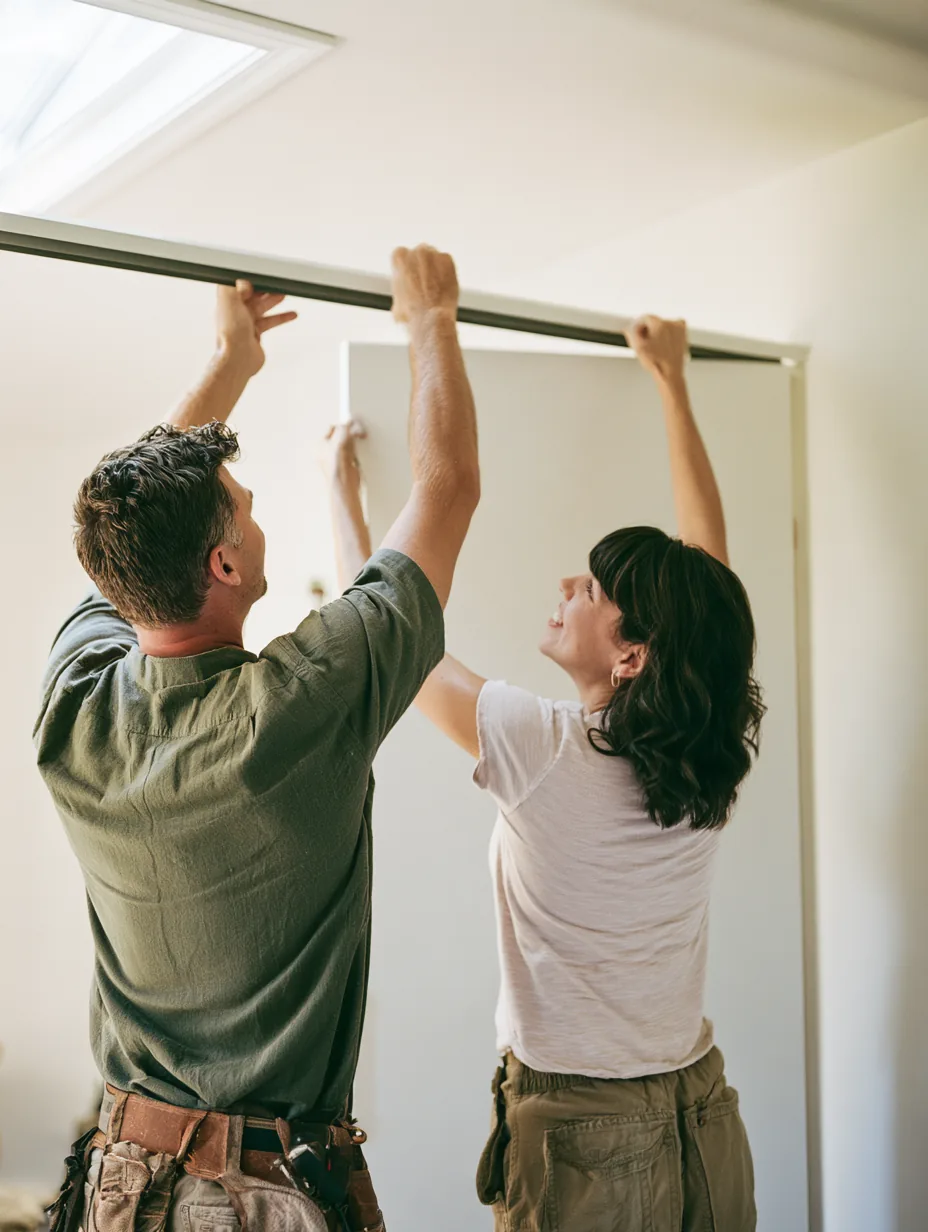
Call your insurer before you sign a contractor's quote. If the damage qualifies, the claim may pay most of the bill and you only need to cover the deductible, which is often $500 to $2,500. That changes the amount you need, and a smaller personal loan costs less.
If the claim is denied or the damage is excluded, you will know the full figure and can apply for a loan with confidence. Our post on what home repairs insurance leaves you to pay lists the most common exclusions, from gradual leaks to mold and foundation settling, and shows how deductibles work in practice. Many Two Blocks Lending requests for repairs are really requests to cover a deductible.
Repair now or wait
Repair now when waiting will make the damage or the cost worse: active leaks, no heat or hot water, sparking outlets and sewage backups. Wait and save when the problem is stable and cosmetic, such as a stained ceiling from a leak already fixed.
Water is the clearest case. A roof leak that costs $800 to patch this month can rot decking and insulation by next season and turn into a $4,000 job. A slow drip under a sink can become a mold problem behind cabinets. In those cases a small personal loan costs less than the damage it prevents, even at a fair-credit APR. People who search Two Blocks Lending after a storm usually face exactly this kind of choice.
Safety issues also justify borrowing. A furnace that will not light in January, a cracked heat exchanger or an electrical fault that trips the same breaker every day put people at risk, and no budget plan should leave them for months. If you are thinking "i need money now" because the house has no heat, a fast personal loan or the utility's emergency assistance program are both worth checking the same day.
Cosmetic or slow-moving issues are different. Peeling exterior paint, a worn deck surface or an old but working water heater can usually wait while you save part of the cost. Saving even half the amount first means a smaller Two Blocks Lending request, a lower payment and less interest, and many lenders offer better terms on smaller loans.
Plan the repayment
Set the repayment so the loan ends before the next likely repair. A water heater loan that runs 36 months could still be open when the furnace needs work, and two repair loans at once strain most budgets.
Use the cost of the repair and your monthly margin to pick a term. For a $2,000 job and a $200 margin, a 12-month personal loan at 24.90% APR costs about $190 a month and about $280 of interest; an 18-month term drops the payment to about $134 and raises interest to about $417. If both fit, the shorter term is the better deal. Lenders reviewing Two Blocks Lending requests generally let you choose between two or three terms.
Build a small repair fund alongside the loan if you can. Even $25 a month into a separate savings account means the next surprise costs less to borrow, or nothing at all. Homeowners often budget about 1% of the home's value each year for maintenance, and renters can set aside a smaller amount for items they own. That habit turns the next Two Blocks Lending search into a choice rather than a necessity.
How to choose a contractor
Choose a licensed and insured contractor, get at least two written quotes that list materials and labor separately, and never pay more than a modest deposit before work starts. A loan does not protect you from a bad contractor.
Check the license with your state or city licensing board and ask for a certificate of insurance before any Two Blocks Lending funds change hands. Look for a written scope of work, a start date, an estimated finish date and a payment schedule tied to progress. Be wary of anyone who knocks on your door after a storm, asks for full payment upfront or pressures you to sign the same day.
Pay with a method that leaves a record, especially when a personal loan funds the job: check, card or bank transfer, never cash alone. If you borrow money for a job, keep the loan agreement, the contract and every receipt in one folder until the work is finished and the warranty period has passed.
What lenders look for
Lenders reviewing Two Blocks Lending repair requests look at income, existing debts and credit history, the same as personal loan lenders do for any purpose. Home ownership itself is not required, and lenders in our network do not place a lien on your property.
Some lenders that review Two Blocks Lending requests ask for the contractor's quote or invoice, especially for amounts near $5,000, to confirm the purpose. Having it ready speeds up verification. Steady income matters more than its source for a Two Blocks Lending repair request, so wages, self-employment income and retirement benefits all count when deposits are regular. The eligibility guide explains age and residency rules by state, and our $2,000 loan guide shows the documents lenders typically ask for at that size.
Common questions
Can renters get a home repair loan?
Yes. Renters often use a Two Blocks Lending match for a small personal loan for repairs they are responsible for under the lease, or for appliances and fixtures they own. Repairs to the building itself are normally the landlord's responsibility, so check your lease first.
Do lenders send the money to the contractor?
Most lenders deposit personal loan funds into your bank account, and you pay the contractor. That lets you pay in stages as work progresses, which is safer than paying everything upfront.
Is a home repair loan tax deductible?
Interest on an unsecured personal loan is generally not tax deductible, even when it pays for home repairs. Interest on home equity debt used to improve the home can be, which is one trade-off between the two.
How fast can I get funds for an emergency repair?
Many lenders fund within one to three business days after approval, and some offer quick loans same day when you finish verification early. For a burst pipe or no heat in winter, ask your contractor whether they can start the emergency part of the work while funding clears.
Explore other loan types & amounts
Loan types
- Personal Loans
- Debt Consolidation Loans
- Moving Loans
- Major Purchase Loans
- Auto Repair Loans
- Vacation Loans
- Emergency Loans
Loan amounts
Next step
Ready to see what lenders offer?
One short request, no fee, and no obligation to accept any offer that comes back.